
Nature Needs More Than Conservation—It Needs Food System Reform
Every year, International Nature Conservation Day reminds us of our responsibility to protect the forests, rivers, wildlife, and ecosystems that sustain life on Earth. Conservation initiatives have helped restore habitats and protect endangered species, but nature continues to decline at an alarming rate. To reverse this trend, we must address one of its root causes: industrial animal agriculture and factory farming.
Factory farming is not only one of the greatest threats to the environment—it is also one of the largest sources of animal suffering. Billions of animals are confined in overcrowded sheds, deprived of natural behaviours, subjected to painful procedures, and treated as commodities. The same system that exploits animals also consumes vast amounts of land, water, and other natural resources, accelerating habitat destruction, biodiversity loss, pollution, and climate change.
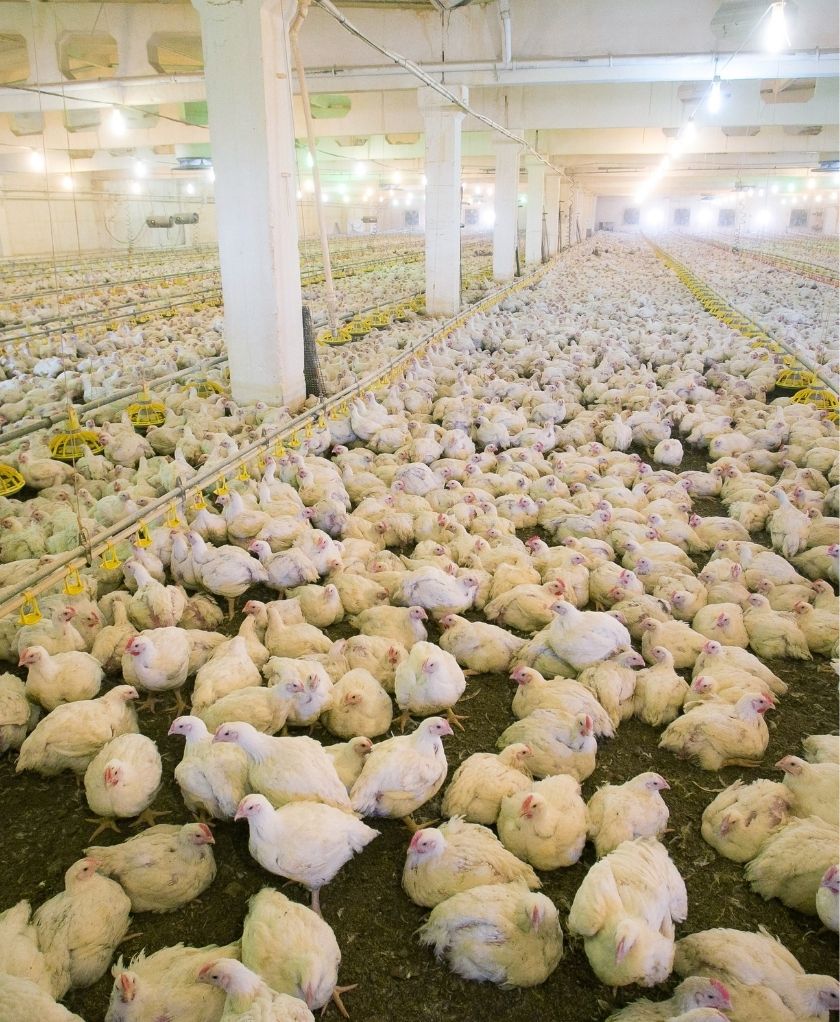
One System, Two Victims: Animals and Nature
Modern animal agriculture is extraordinarily resource-intensive. According to the Food and Agriculture Organization (FAO), livestock production uses around 77% of the world’s agricultural land, yet provides only 18% of global calories. Forests, grasslands, and wetlands are frequently cleared to create grazing land or grow feed crops for farmed animals, destroying habitats that countless wild species depend on.
The IPBES Global Assessment Report identifies land-use change—primarily driven by agriculture—as the leading cause of biodiversity loss worldwide. As natural habitats disappear, wildlife populations decline, ecosystems become fragmented, and species face an increased risk of extinction.
Meanwhile, the animals raised within factory farms endure lives of confinement and deprivation. Hens are often housed in crowded sheds, pigs are confined in barren pens, and many animals are selectively bred to grow so rapidly that they suffer painful health problems. Their welfare is sacrificed in pursuit of maximum productivity.
Factory Farming Pollutes the Planet
The environmental impacts extend far beyond land use. Intensive livestock farms generate enormous quantities of manure and wastewater that can pollute rivers, lakes, and groundwater when poorly managed. Animal agriculture also contributes significantly to climate change.
The FAO estimates that livestock supply chains account for approximately 14.5% of global human-induced greenhouse gas emissions. Rising temperatures, changing rainfall patterns, and extreme weather events further damage ecosystems, placing even greater pressure on wildlife already struggling to survive.
Nature cannot recover while one of its biggest drivers of destruction continues to expand.

Veganism: A Solution for Animals and the Planet
Protecting nature requires more than planting trees or creating protected areas—it requires transforming our food system.
Choosing a vegan lifestyle is one of the most effective ways individuals can reduce their impact on the environment while preventing immense animal suffering. Plant-based foods generally require less land, less water, and produce fewer greenhouse gas emissions than animal products. Reducing demand for meat, dairy, and eggs also reduces the demand for factory farming, helping spare billions of animals from lives of confinement and freeing land that can be restored to forests, grasslands, and other natural ecosystems.
Today, delicious and nutritious plant-based alternatives to meat, milk, eggs, and other animal products are more accessible than ever. From traditional Indian staples like dals, legumes, millets, and soy-based foods to innovative plant-based meats and dairy alternatives, compassionate choices are becoming easier for everyone.
Every plant-based meal is an opportunity to reduce animal suffering, conserve natural resources, and lessen our environmental footprint.
A Future Where Nature and Animals Thrive
This International Nature Conservation Day, let us broaden our understanding of conservation. Protecting wildlife is not only about saving endangered species or restoring forests—it is also about questioning the systems that destroy habitats and inflict suffering on billions of animals every year.
Sources
- Food and Agriculture Organization (FAO). Livestock: On Our Plates or Eating at Our Table? (2018).
- Food and Agriculture Organization (FAO). Tackling Climate Change Through Livestock (2013).
- Intergovernmental Science-Policy Platform on Biodiversity and Ecosystem Services (IPBES). Global Assessment Report on Biodiversity and Ecosystem Services (2019).
- Poore, J. & Nemecek, T. (2018). Reducing food’s environmental impacts through producers and consumers. Science, 360(6392), 987–992.
Pledge to try veg